Newsletter Subscribe
Enter your email address below and subscribe to our newsletter

 ByJohn A
An automatic door can look simple from the outside: it opens when someone approaches and closes once they pass through. Behind that movement are the operator, sensors, controls and door hardware, all working together. If one part is selected or installed incorrectly, the door may not respond as expected. That’s why Automatic door technician training matters when installing or servicing commercial door hardware.
Automatic door technician training provides technicians with a systematic method of learning about automatic doors, installation and safety procedures. For example, AAADM training prepares installers, service technicians, and inspectors to work with automatic doors. The program focuses on safe installation, inspection, and servicing, while also covering the technology behind these systems.
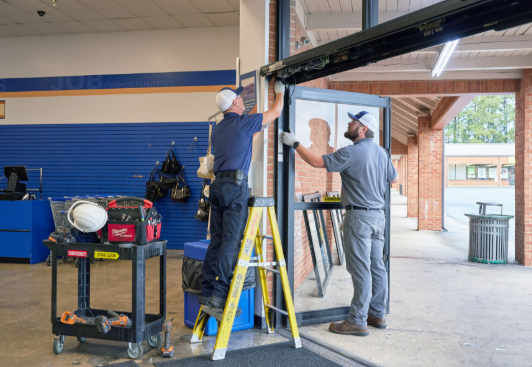
The importance of such knowledge can be noted at various stages of installation by a technician:
Before installing the operator, check that the door moves freely through its full range of motion. At this stage, it is necessary to check the frame, hinges, track and area around the door for any objects that could prevent its movement.
The operator, sensor and activation device must match a certain door system. Even though parts look the same, their functions and compatibility could be different.
The installation manuals describe all the requirements for each door model. Technicians should read instructions carefully.
The installation process does not stop when a door starts moving. Check all the operations and safety mechanisms and verify whether the entrance works as it was described by the manufacturer.
Commercial door hardware includes more than the visible handles or door panels. Depending on the system, it can include operators, sensors, switches, locks and controls. Each component affects how the entrance behaves.
A trained technician can identify how these parts interact and spot a mismatch before it becomes a problem. For example, a door may open when approached but fail to detect someone standing in its path. That symptom may point to a different problem than a door that fails to activate. Since sensor and activation-device placement affects how the system responds, the technician should follow the product instructions and test the complete setup after installation. Manufacturers provide installation instructions and technical documents for their specific products.
When replacing sliding door parts, technicians need to identify the door and operator model before ordering. Rollers, tracks, sensors and control components can vary between systems. Guessing from appearance alone may lead to delays or a part that does not fit.
An automatic door store can help identify a compatible component if you provide the model number, a photo of the part and a description of the problem. The technician still needs to check whether the part is appropriate for the door and follow the manufacturer’s installation instructions If the cause isn’t clear, a site inspection can help identify whether the component or another part of the system is at fault.
Commercial door hardware by Automatic Door Store includes swing door operators suited to different door types and usage levels. Disclosure of the details of the door and type of the operator could assist in finding the suitable activation device and sensors. The operator and sensors should be tested together after installation. AAADM suggests immediate testing after the installation and then every year.
Training helps technicians understand system components, installation instructions and safety checks. Requirements can vary by location and project, so technicians should also follow the manufacturer’s documentation and applicable local codes.
It may be able to help identify a part if you provide the operator’s model number, photos and details about the issue. A technician should confirm the part is suitable for the system before installation.
No. The sensors and activation devices needed will depend on the operator model and door setup. Check the product documentation to confirm which accessories are compatible.
Have the door inspected once installation is complete, and follow the manufacturer’s maintenance instructions. In the United States, AAADM recommends an inspection immediately after installation and then once every year.
See also: Understanding Commercial Printing Services and Their Business Applications
Automatic door safety depends on the operator, sensors and hardware working together. Automatic door technician training helps technicians understand how to select, install and test these components. Before ordering sliding door parts or installing a swing door operator, verify the model, follow the manufacturer’s instructions, and have the complete system inspected. That’s how you avoid compatibility problems and help ensure the door operates as intended.