Newsletter Subscribe
Enter your email address below and subscribe to our newsletter

 ByJohn A
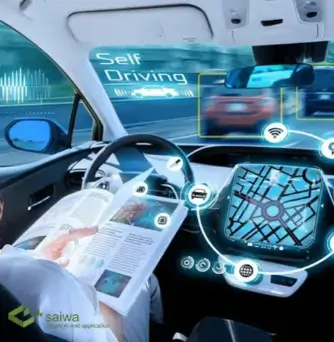
Self-driving cars rely on AI to interpret sensory inputs and localize within a map. Perception and mapping fuse data to identify objects, lanes, and drivable space. Planning, prediction, and control convert this understanding into feasible trajectories and precise maneuvers. Training and validation ensure robustness, while governance addresses bias and safety. Real-world deployment introduces ethics and edge-case considerations that require ongoing monitoring and safe rollback mechanisms, keeping the investigation grounded as complexities accumulate.
Perception and mapping constitute the core sensing stack in modern autonomous vehicles.
The analysis focuses on perception fusion, where heterogeneous sensors integrate to produce robust environmental estimates.
Map localization anchors dynamic observations to a consistent reference frame, enabling stable ego-positioning.
Together, these components support reliable scene understanding, obstacle identification, and trajectory-informed awareness, forming a precise foundation for autonomous decision-making in varied contexts.
Planning, prediction, and control form a tightly coupled loop that determines vehicle behavior from perception and mapping data. The process integrates trajectory generation, obstacle reasoning, and dynamic feasibility checks to fulfill safety and efficiency goals. Response latency directly affects replan frequency and comfort, while hardware optimization mitigates compute bottlenecks, enabling robust real-time decision making under diverse conditions.
From data to action, the training and validation pipeline for driving AI integrates data collection, annotation, model design, and rigorous evaluation to ensure reliable performance in real-world driving. The process emphasizes data governance, trackable provenance, and bias mitigation, while iterative training, validation, and ablation studies quantify robustness. Upon satisfactory metrics, model deployment proceeds with monitoring, rollback plans, and continuous improvement.
See also: fentomagazine
Real-world deployments of autonomous driving systems confront a range of challenges that extend beyond algorithmic accuracy.
The analysis focuses on safety and ethics, detailing sensor fusion limitations, edge-case detection, and fail-safe mechanisms.
It also addresses privacy risks and liability concerns, emphasizing governance, accountability, and transparent testing.
Technical rigor guides decision-making toward resilient systems while preserving user autonomy and public trust.
Self-driving systems anticipate unpredictable pedestrians via multimodal sensing, trajectory prediction, and conservative braking. They prioritize pedestrian safety through proactive avoidance, built-in redundancies, and safety margins, though exceptions exist; continuous learning and scenario testing refine policy, enabling freedom with accountability.
Sensor spoofing and data corruption compromise perception, triggering near-miss learning and delayed decisions; unpredictable pedestrians test resilience, while regulatory decisions and explainable AI guide verification, redundancy, and containment to preserve safety and driverless autonomy under uncertainty.
Yes, AI can explain why a driving decision was made by presenting a concise decision rationale supported by explainability methods, including feature attribution and scenario traces, enabling autonomous systems to reveal the reasoning behind safety-critical decisions.
Ripple echoes; vehicles learn from near-miss incidents through iterative learning loops, updating models and policies. They rely on data labeling to categorize events, refine perception, and adjust planning modules, balancing safety objectives with performance, while preserving user autonomy and trust.
Regulatory compliance governs AI decisions in autonomous driving, dictating transparency, accountability, and auditability. Safety certification processes verify system robustness and fault tolerance; authorities enforce ongoing verification, validation, and reporting, outlining operational limits, data governance, and incident response for autonomous fleets.
In the automaton’s theater, perception stitches a mosaic from sensors, while mapping anchors every shard to a stable compass. Planning, prediction, and control choreograph a disciplined ballet, where trajectories are weighed like scalars and safety margins read as constants. Training refines the eye and judgment, validation tests the compass against chaos. Real-world deployment then conducts a careful, monitored performance, with ethics as the backstage crew. The result is a measured, evolving cadence toward reliable autonomy.