Newsletter Subscribe
Enter your email address below and subscribe to our newsletter

 ByJohn A
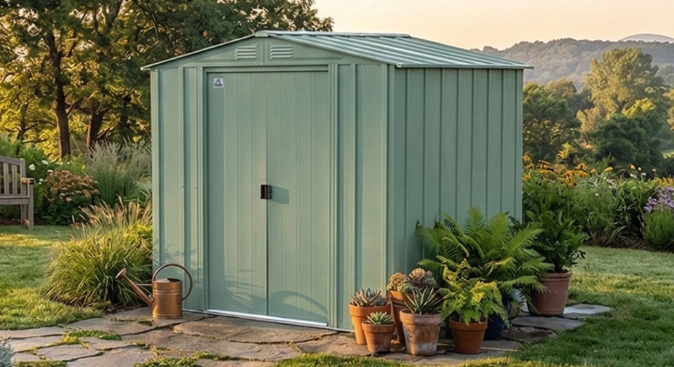
A shed can look spacious in a photo and feel surprisingly tight once the lawn mower, bikes, and garden tools are inside. Before browsing storage sheds for sale, take measurements in two places: the place where the shed will sit and the items you plan to store. That gives you a more useful starting point than just guessing how much space you need. A tape measure and a quick sketch can help you compare backyard sheds, barn sheds, and cottage sheds against your yard and storage needs.
Before choosing a shed, look beyond its listed size and appearance. The points below can help you check whether the storage shed will fit your property, your belongings, and the way you plan to use it.
Measure the length and width of the area where you want the shed. Then consider the space beyond the shed’s footprint. Leave enough space to open the shed doors fully and walk around it for maintenance. Measure the distance to nearby fences, trees, and buildings as well.
Look for slopes, low points, and pooling after rain on the ground. The area for a shed should be level, and the site might require preparation prior to delivery. Inquire with the seller what the foundation of the model you are interested in is.
List the larger items first: a mower, snow blower, bicycles, wheelbarrow, workbench, or shelving unit. Measure the full width and length of each item, including any handles or attachments that stick out. For equipment with handles or attachments, include those in the measurement.
For storage sheds used for more than one purpose, account for the space needed to move around. A workbench, for example, needs standing room in front of it. Storing bins along every wall may leave little space to reach the items at the back.
The advertised shed size usually refers to its outer dimensions. Ask for the interior measurements as well. Wall framing and construction can reduce usable floor space, and sloped ceilings may limit storage along the sides.
When you’re looking at differences between barn sheds, consider the impact of roof shape on headroom and upper storage. Consider the amount of wall space available for features such as windows and other decorative details for cottage sheds. While a window can illuminate the interior space, it can also take up some space for storing items.
Use the same measurements when reviewing each storage shed. For hand tools and garden equipment, a compact shed might be a better choice, and for the equipment that can be rolled in and out, a larger shed may be more practical. The dimension will rely on your lawn size, access and storage list.
| Measurement | Why it matters |
| Site length and width | Confirms the shed fits with room around it |
| Delivery path and gate width | Helps establish whether the shed can reach the site |
| Door opening | Determines whether large items can pass through |
| Interior floor area | Shows how much usable storage space is available |
| Interior height | Matters for tall tools, shelves, and overhead storage |
Sheds Direct offers storage sheds for sale and a place to compare shed styles and sizes for different properties and uses. Once you have narrowed down your options using measurements, check the interior dimensions, door size, site needs, and access for delivery of the model with the team when reviewing storage sheds for sale
Measure both sets of dimensions. The outer dimensions help you check whether the building fits in the yard, while interior dimensions show the usable floor area. Ask for the door opening size separately, since it can be narrower than the shed itself.
There is no single clearance that suits every property. Leave enough room for the door to open, people to pass, and the building to be maintained. Check local rules and the shed seller’s site requirements before choosing the final location.
Measure the widest item you plan to store, including handles or attachments, and compare it with the clear door opening. Allow room to guide or turn the item through the entrance, especially if it has wheels.
Either style can work. Compare the interior dimensions, roof height, door position, windows, and wall space for shelving. Choose based on the items you need to store and how you plan to use the shed.
See also: Understanding Commercial Printing Services and Their Business Applications
Measure the site, delivery route, door opening, and the larger items you plan to keep inside. Confirm that the delivery route is accessible and the shed doors are wide enough for your equipment. A quick floor plan can help you leave room for shelves and a work area. This small step makes it easier to compare storage shed sizes and spot access issues before delivery day. Keep your measurements nearby when discussing options with the seller.